
What decides the cost of a tiled floor?
Two floors of the same size can cost very different amounts. The type of tile is the first reason, and what shows when a tile chips tells you which type you are looking at. Here is what moves the total up or down.
Start with the body of the tile
You choose a tile for its surface, but the body underneath decides how it wears, where it can go and a good part of what it costs. The easiest way to understand the difference is to look at what shows when something heavy is dropped and the surface chips.
Most tiles are one of three types.
Glazed ceramic: for walls
A glazed ceramic tile is a fired clay body with a thin, glassy coating on top that carries the colour. Chip it and the clay underneath shows in a different colour, often red-brown or off-white, so the mark is easy to see.
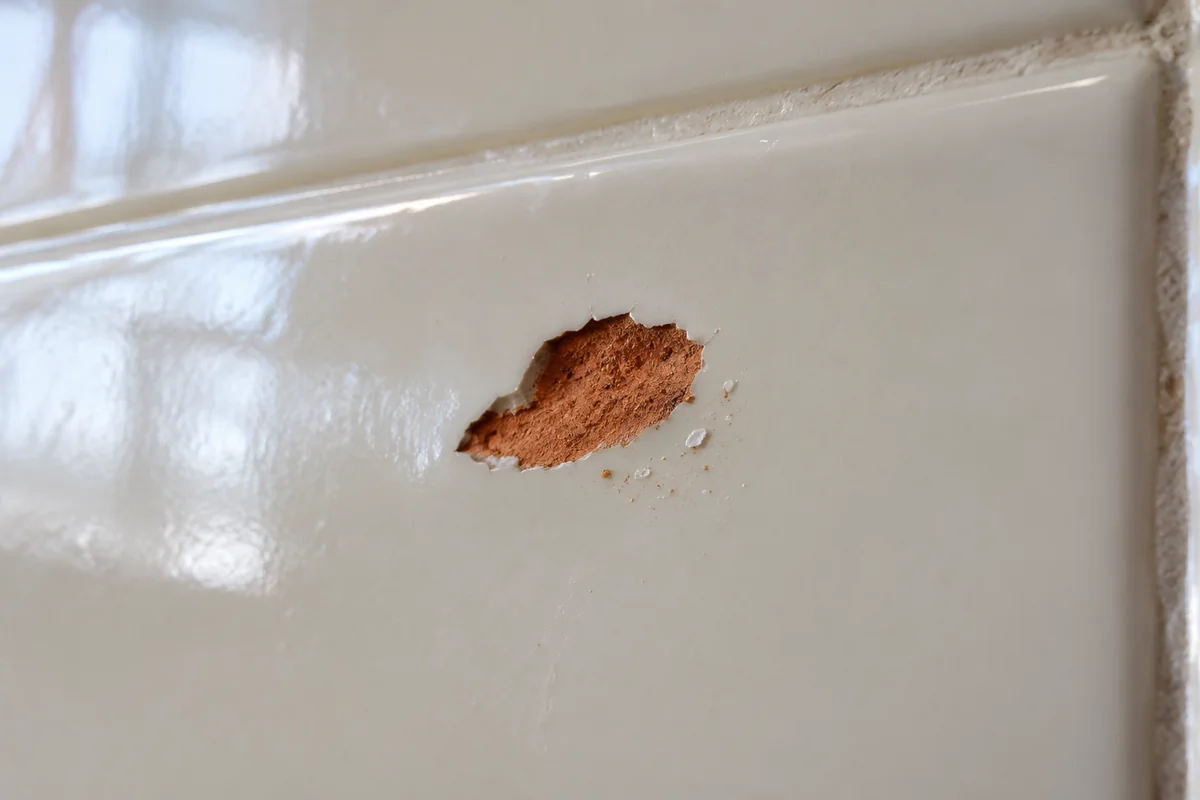
The body is lighter and more porous than porcelain, which makes it easy to cut and fix, and it is usually the least costly of the three. It belongs on walls, where nothing is dropped on it and nobody walks on it: bathroom and kitchen walls, splashbacks and feature walls.
Glazed porcelain: for most floors at home
Porcelain is pressed harder and fired hotter than ceramic, so the body is dense, strong and takes in almost no water. On a glazed porcelain tile the design, whether marble, stone, wood or cement, is printed on the surface. Under it the body is one plain colour.
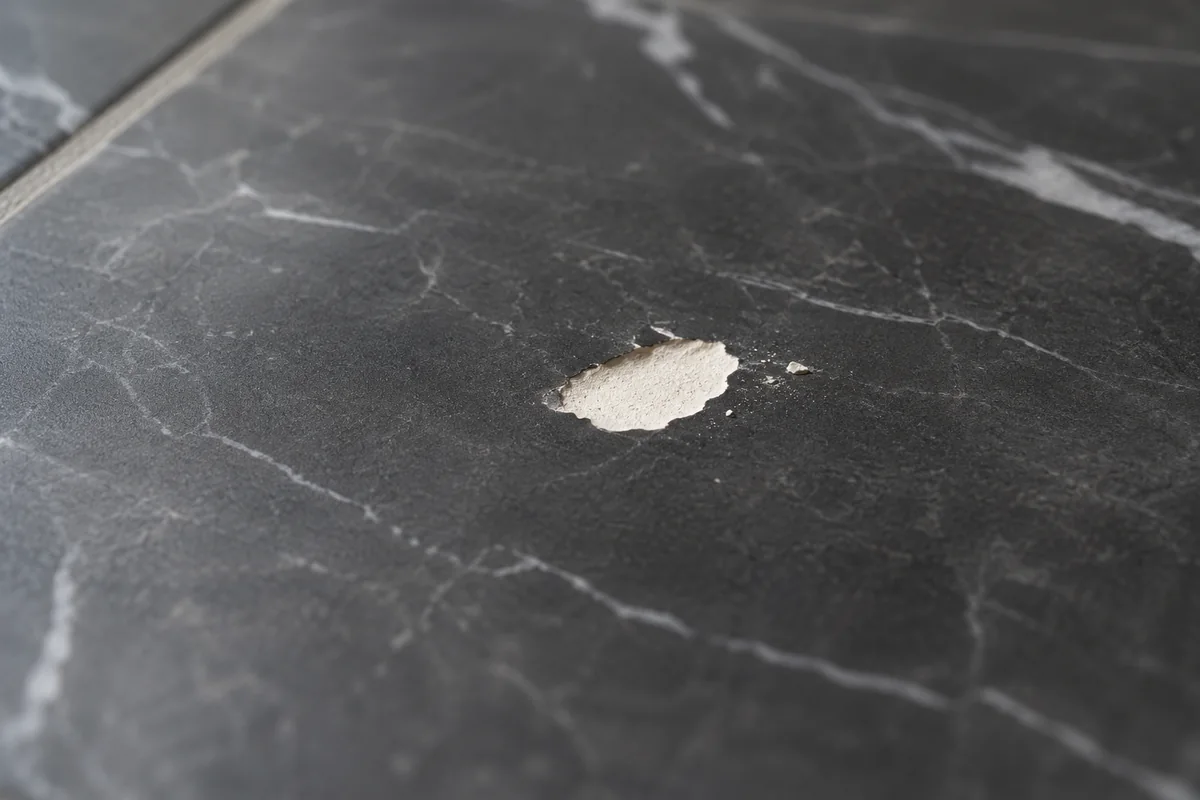
It takes a hard knock to chip one. When it does happen, the plain body shows through the pattern. This is the tile for living rooms, bedrooms, kitchens and bathrooms, and it gives the widest choice of looks and sizes.
Full-body porcelain: for floors that work hard
In a full-body tile the same material and colour run through the whole thickness. A chip or a deep scratch only uncovers more of the same, so it is hard to spot, and the edge can be shaped for a step without exposing a different colour.
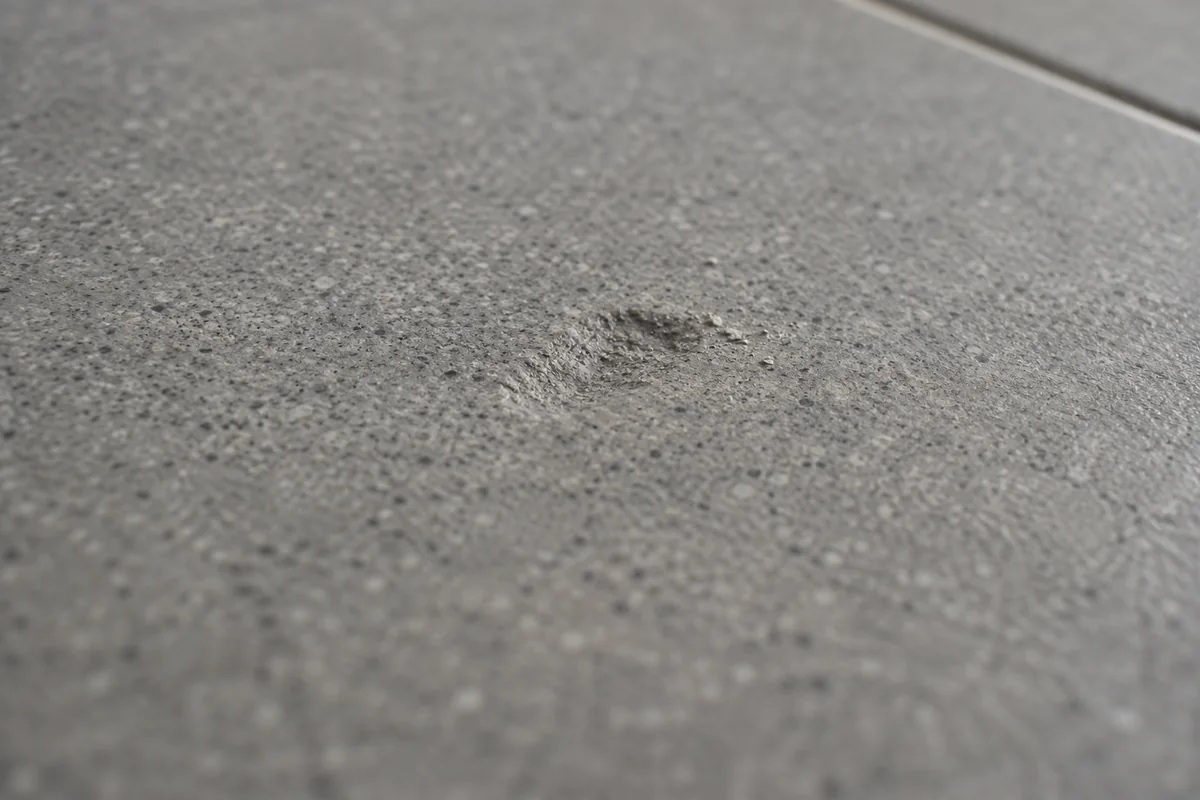
The colour goes into the whole tile and not only the surface, so it usually costs more per square metre. It earns that on floors that take heavy wear: shops, restaurants, hotel lobbies, stairs, ramps and busy entrances. For a bedroom it is more tile than the room needs.
Size, edges and finish
Large formats such as 60x120 cm need bigger presses, more careful firing and stronger packing, so they tend to cost more per square metre than a 60x60 cm tile in a similar look. Rectified tiles, whose edges are ground square after firing so the joints can be narrow, add one more step at the factory.
Finish plays a part as well. A polished surface, a textured anti-slip surface or a printed design that varies from tile to tile each takes extra work to make.
Where the floor is
A bedroom floor has an easy life. A kitchen, a veranda, a pool surround or a hotel lobby does not. Wet and outdoor areas need a slip-resistant surface, and busy commercial floors need a tile made for heavy wear. Choosing the right tile for the place can cost more at the start, and it is what stops you paying for the floor twice.
The shape of the room and the pattern
You pay for the tiles you cut away as well as the ones you see. A simple rectangular room laid in straight lines wastes the least, and most tilers allow around 10 percent extra. A diagonal or herringbone pattern, a room with many corners and columns, or a large-format tile will all need a bigger allowance.
The same choices change the laying time. Small rooms full of cuts, patterns that must line up and big tiles that need two people to handle all take longer than an open floor in a standard size.
What goes under and between the tiles
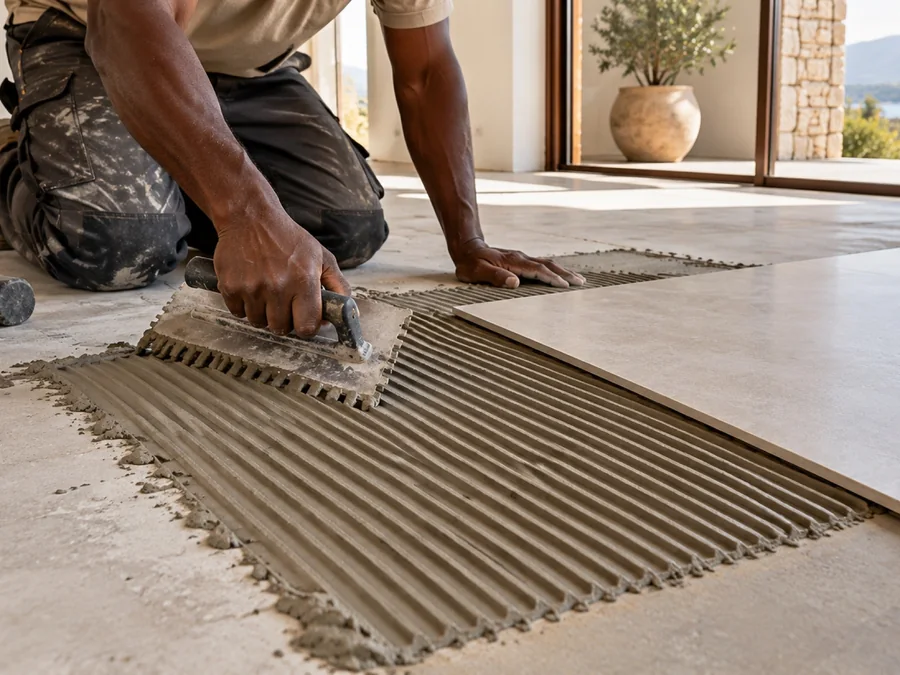
A tile is only as good as the surface it sits on. An uneven or cracked floor has to be levelled and repaired first, and bathrooms, balconies and other wet areas should be waterproofed before any tile goes down. These steps are easy to leave out of a first estimate and expensive to skip.
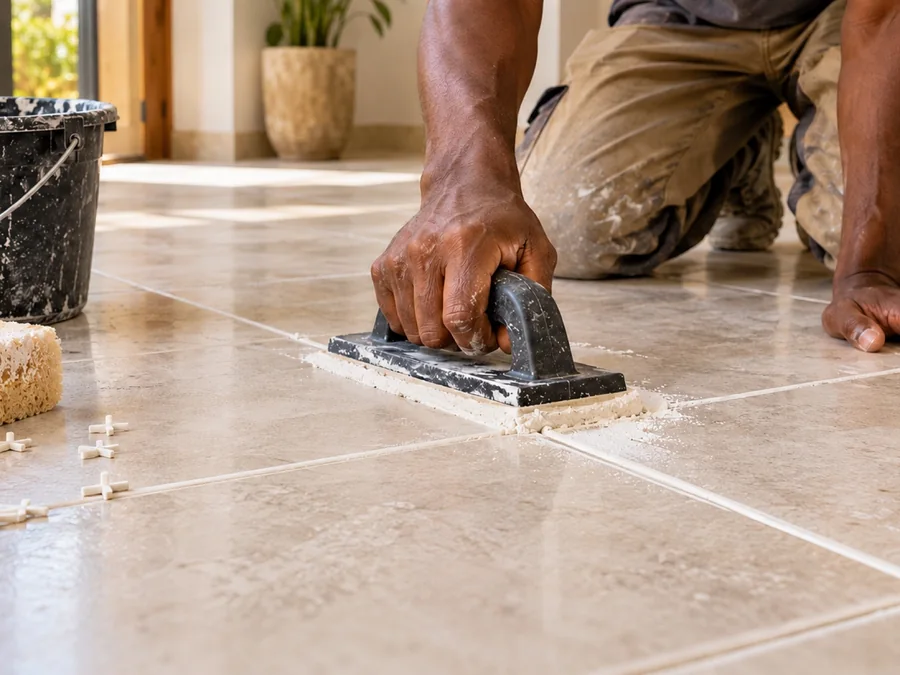
Adhesive and grout belong in the budget too. Dense porcelain and large formats need a stronger, more flexible adhesive than a small ceramic wall tile. Cement grout suits most rooms, while epoxy grout costs more and resists stains and water far better, which makes it worth considering for kitchens, showers and pools. Add trims for exposed edges and steps.
Ordering and delivery
Tiles are made in batches, and the shade can differ slightly between them. Ordering the whole floor at once, with a few spare boxes, avoids a second delivery and the risk of a visible colour change halfway across the room.
Distance and access count as well. Tiles are heavy, so delivery to an upper floor or to a site far from town is part of the real cost of the job.
How to get a figure you can rely on
A quote is only as accurate as the information behind it. Bring the room sizes or a plan, say where each floor is and how it will be used, and add a photo of the existing surface if you can.
At Spanish Tiles & Sanitary Ware in Dar es Salaam and Arusha, our showroom team will work out the tiles, adhesive, grout and trims together, so the figure you take home covers the whole floor. You can also send your room sizes on WhatsApp and we will reply with a quotation.