
Close-coupled, back-to-wall or wall-hung: choosing a WC
The WC is the one piece in a bathroom you cannot move later. Here is what the terms mean and how to choose.
Close-coupled
The cistern sits directly on the back of the pan. It is the classic, easy-to-install choice and the most common in homes. A close-coupled WC is a set: pan, cistern and seat, chosen to fit each other.
Back-to-wall
The pan stands on the floor but sits flush against the wall, with the cistern hidden in a unit or a boxed-in wall. No visible pipework, and easier to clean around.
Wall-hung
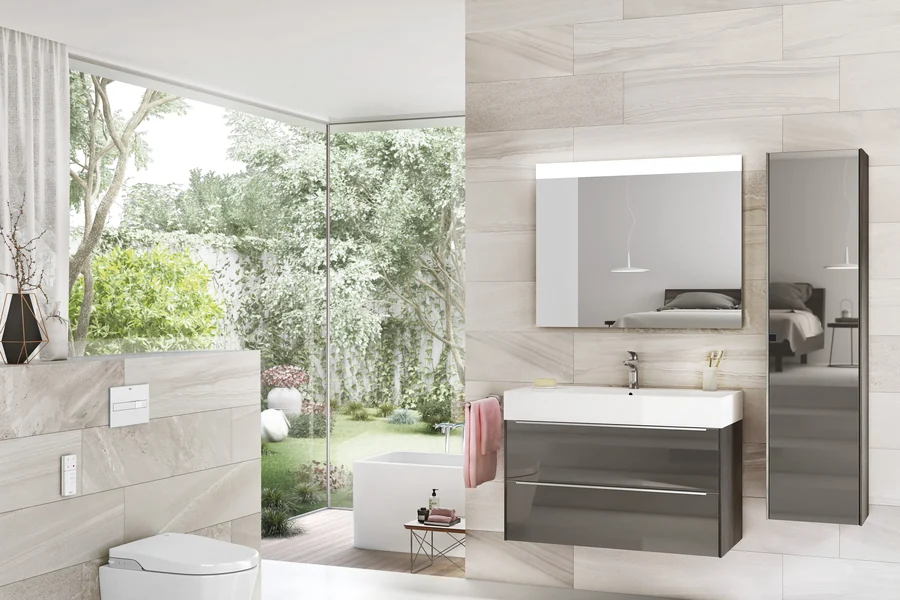
The pan is fixed to a concealed frame inside the wall, such as a Geberit Duofix, which also holds the cistern. The floor stays clear for cleaning and the room feels bigger. You choose the pan, the frame and a flush plate.
P-trap or S-trap
This is where the waste leaves the pan. A P-trap exits horizontally into the wall; an S-trap exits down into the floor. Check your drainage before choosing, especially when replacing an existing WC.
Details that matter
Rimless bowls are easier to keep clean. Soft-close seats close quietly without slamming. And a seat must match its pan: we list every WC as a complete set with the seat options that fit it.