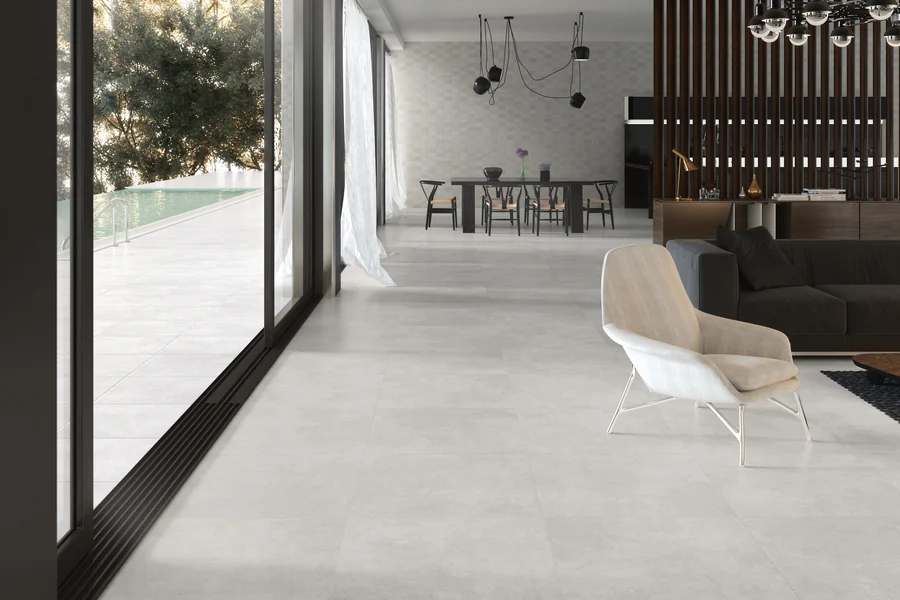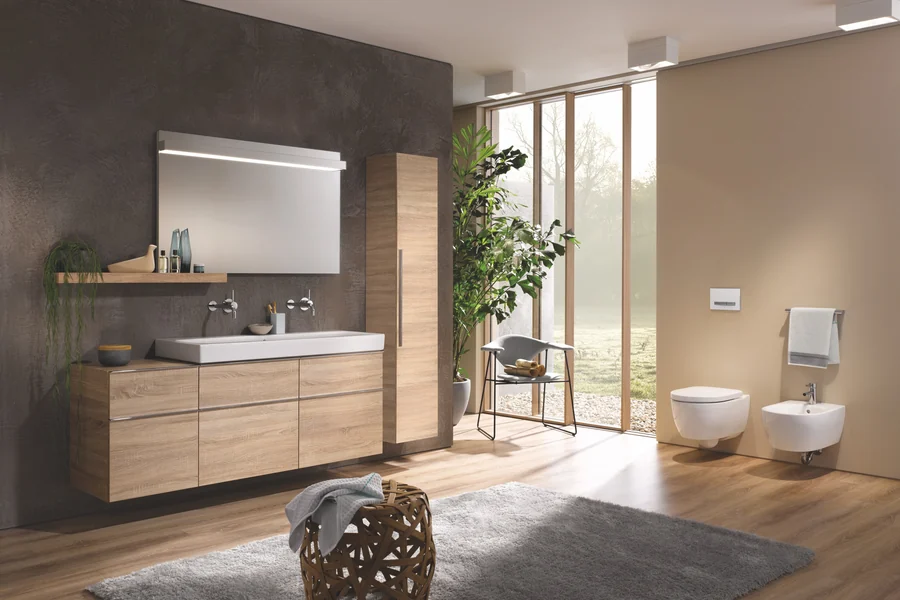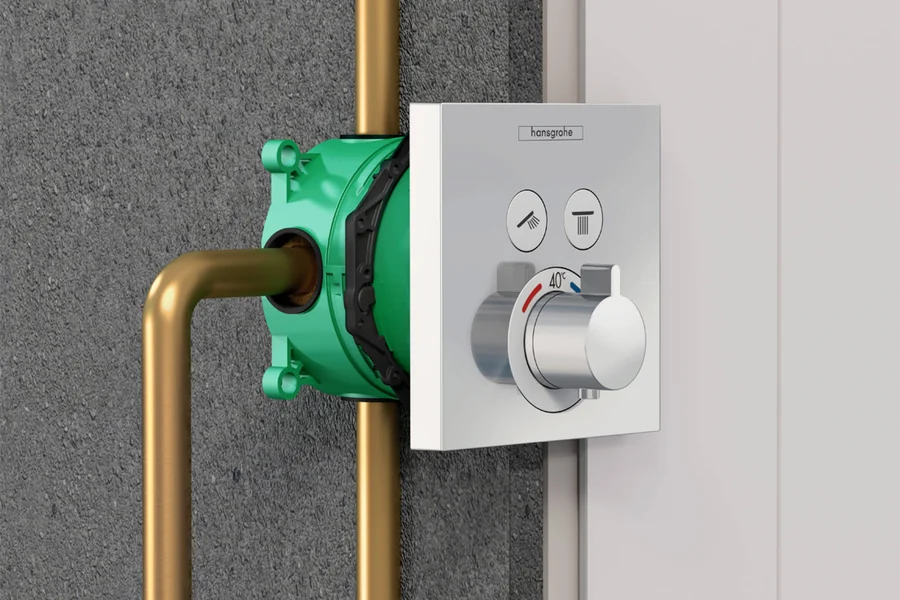

Tiles for pools, terraces and wet areas
Outdoor and wet floors ask more of a tile than a living room does. Here is how to read slip ratings, why porcelain is the default outside, and what to check before you choose.
Start with slip resistance
Floor tiles are tested for grip. The ramp test for shoes (DIN 51130) gives an R rating from R9 to R13: the higher the number, the more grip. Terraces, entrances and commercial kitchens usually call for R10 to R11 and above.
Barefoot areas such as pool surrounds, showers and changing rooms are tested separately (DIN 51097) and rated A, B or C, with C the most slip resistant. For pool decks and steps, ask for B or C.
Why porcelain outdoors
Porcelain is fired dense, so it absorbs very little water. That makes it stable in sun and rain, resistant to staining and easy to clean around pools. Matt and structured surfaces are the natural choice outside; keep polished finishes for indoors.
Pools and water features
For pool linings, glass and ceramic mosaics are made for constant immersion and sharp curves. Pair them with a slip-rated tile for the surround and matching step and coping pieces, so the edge is safe as well as beautiful.
Before you order
Check the rating on the technical sheet rather than the look of the surface, allow for falls to drains, and choose a grout and adhesive rated for exterior and wet use. Our teams can show you anti-slip tiles side by side in the showroom.